[de] Liebesakt;
Innebild einer Rotfigurigen Trinkschale um 470 v.Chr.; Museo Nazionale Tarquinia.
Showing posts with label knobby walking cane. Show all posts
Showing posts with label knobby walking cane. Show all posts


Welche Bedeutung hat der knorrige Gehstock? |
What meaning has the knobby walking cane?
[en] Aulos player.
Attic red-figured kylix, ca. 490 BC. From Vulci.
[fr] Joueur d'aulos.
Kylix attique à figures rouges, vers 490 av. J.-C. Provenance : Vulci.
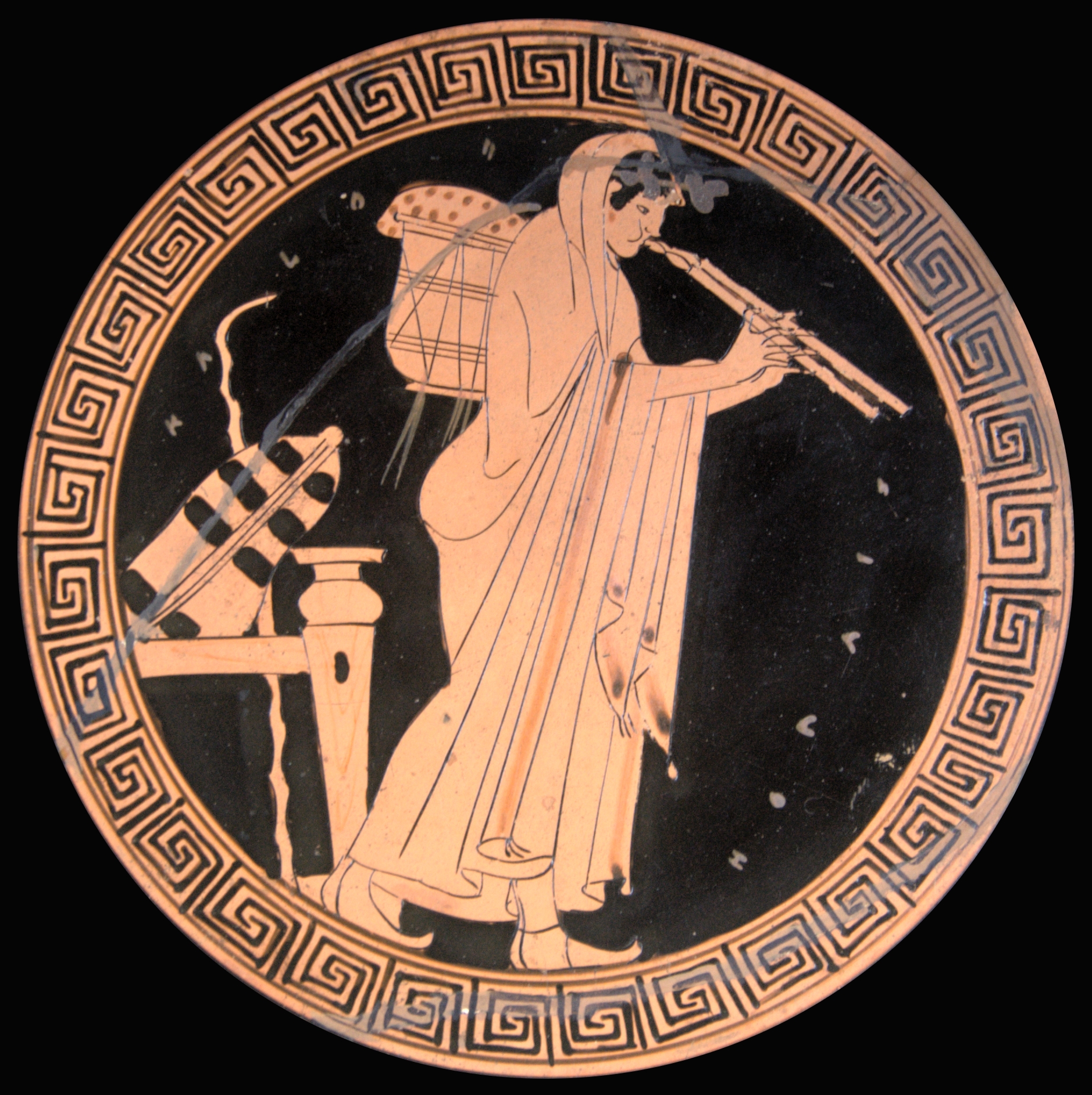
Attic red-figured kylix, ca. 490 BC. From Vulci.
[fr] Joueur d'aulos.
Kylix attique à figures rouges, vers 490 av. J.-C. Provenance : Vulci.
Ein Freier bezahlt eine Hetäre
[en] Un jeune offre une bourse à une hétaïre (courtisane) assise. Derrière elle se tient une jeune femme avec une plemochoé.
Peliké attique à figures rouges de Polygnotos, vers 430 av. J.-C. Provenance : Rhodes, Camiros. Musée archéologique national, Athènes, n°1441.
[en] Youth giving a purse to a sitting hetaera (courtesan). Behind her stands a young woman carrying a plemochoe (toilet vase). Attic red-figure pelike (wine-holding vessel) by Polygnotos, ca. 430 BC. From Kameiros, Rhodes.
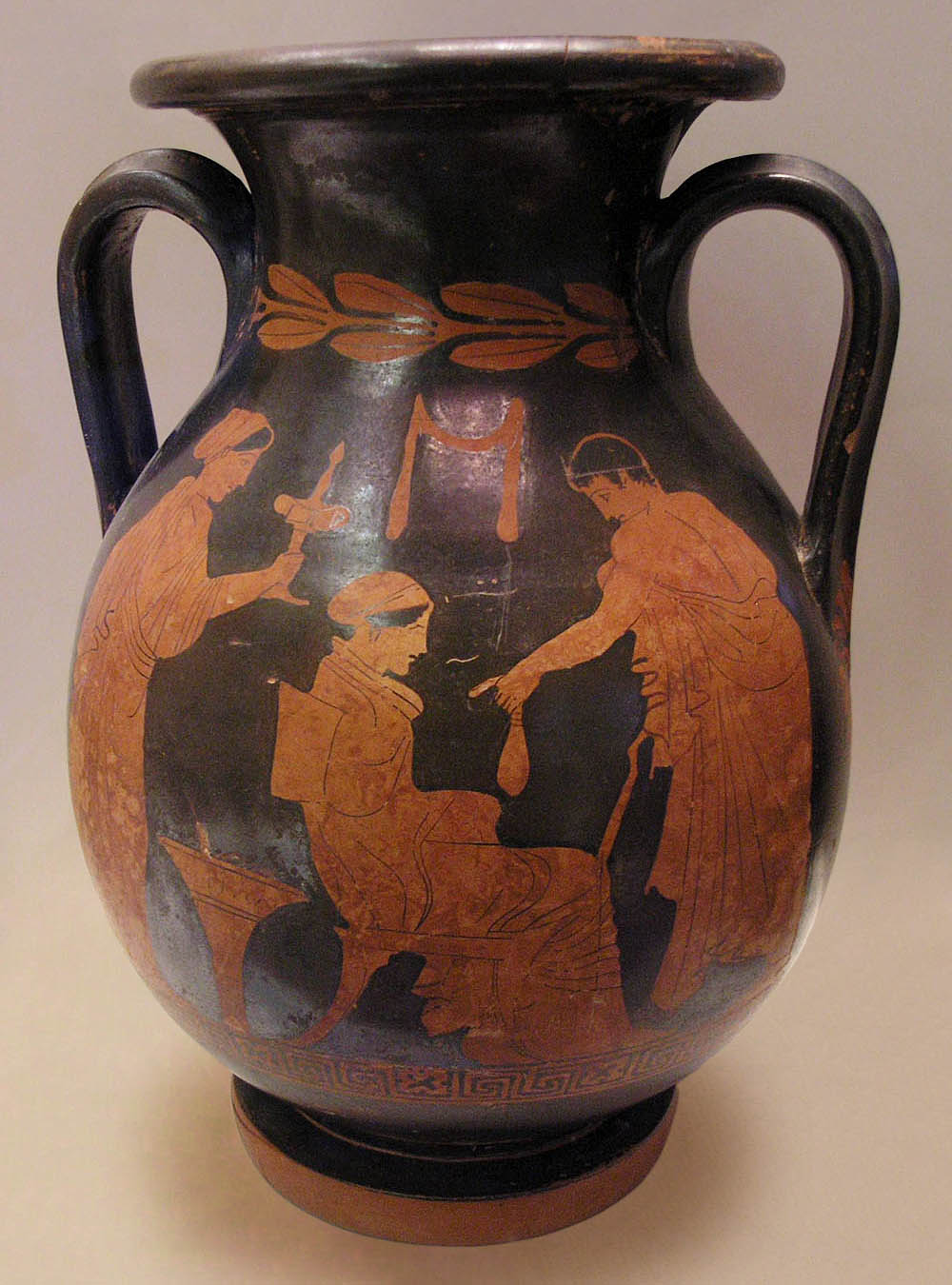
Peliké attique à figures rouges de Polygnotos, vers 430 av. J.-C. Provenance : Rhodes, Camiros. Musée archéologique national, Athènes, n°1441.
[en] Youth giving a purse to a sitting hetaera (courtesan). Behind her stands a young woman carrying a plemochoe (toilet vase). Attic red-figure pelike (wine-holding vessel) by Polygnotos, ca. 430 BC. From Kameiros, Rhodes.
A hetaera {?} and her client.
[en] A hetaera {?} and her client.
Attic red-figured lekythos by the Painter of Athens 12778 (eponymous vase), ca. 460–450 BC.
[fr] Found in Eretria. National Archaeological Museum in Athens, 12778.
Hétaïre (courtisane) et client.
Lécythe attique à figures rouges du Peintre d'Athènes 12778 (vase eponyme), 460-450 a. C. Provenance : Érétrie. Musée archéologique national, Athènes, n° 12778.

Attic red-figured lekythos by the Painter of Athens 12778 (eponymous vase), ca. 460–450 BC.
[fr] Found in Eretria. National Archaeological Museum in Athens, 12778.
Hétaïre (courtisane) et client.
Lécythe attique à figures rouges du Peintre d'Athènes 12778 (vase eponyme), 460-450 a. C. Provenance : Érétrie. Musée archéologique national, Athènes, n° 12778.
Männliche Prostitution | Male prostitution
[en] Man soliciting boy for sex in exchange for a purse containing coins. The inscription reads ΗΟ ΠΑΙΣ ΚΑΛΟΣ (“The Boy is Beautiful”).
Athenian red-figure kylix, 5th c. B.C. Metropolitan Museum of Art, New York.
[fr] Homme sollicitant les faveurs d'un garçon en échange d'une bourse remplie d'argent. Inscription kalos : ΗΟ ΠΑΙΣ ΚΑΛΟΣ (« le garçon est beau »).
Kylix athénien à figures rouges, Ve siècle av. J.-C. Metropolitan Museum of Art, New York.

Athenian red-figure kylix, 5th c. B.C. Metropolitan Museum of Art, New York.
[fr] Homme sollicitant les faveurs d'un garçon en échange d'une bourse remplie d'argent. Inscription kalos : ΗΟ ΠΑΙΣ ΚΑΛΟΣ (« le garçon est beau »).
Kylix athénien à figures rouges, Ve siècle av. J.-C. Metropolitan Museum of Art, New York.
Subscribe to:
Comments (Atom)


 Posts
Posts


